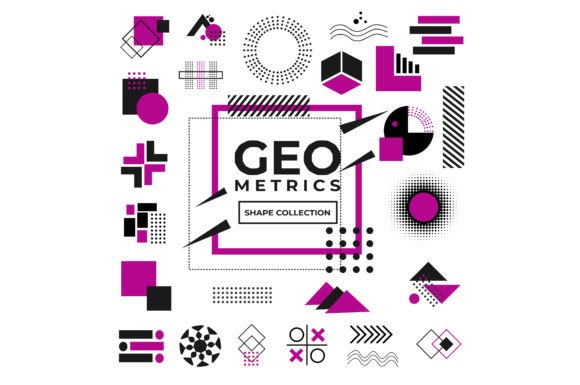
Geometric Shape Design Elements
In the fast-paced world of digital creation, clarity often trumps complexity. Whether you are designing a mobile app interface, crafting a corporate presentation, or developing a brand identity, the foundational building blocks of your visual language matter immensely. Geometric shape design elements provide a versatile toolkit for creators who need to communicate ideas quickly and effectively. Unlike intricate illustrations that may require specific cultural context or detailed interpretation, geometric forms—circles, squares, triangles, and polygons—are universally understood. They offer a clean, modern aesthetic that adapts seamlessly across various mediums, from high-resolution print materials to responsive web layouts.
The true value of a comprehensive collection of these elements lies not just in their visual appeal, but in their technical flexibility. When you access files in formats such as Ai CC, EPS10, SVG, and JPEG Preview, you are equipping yourself with assets that can scale, edit, and integrate without losing quality. This versatility is crucial for professionals who must maintain consistency across different platforms while meeting tight deadlines.
Enhancing Brand Consistency Through Modular Design
For marketers and small business owners, maintaining a cohesive brand identity is a constant challenge. Inconsistent visuals can dilute brand recognition and confuse customers. Geometric shapes serve as modular components that can be rearranged, recolored, and resized to fit various marketing collateral while retaining a unified look. By using a standardized set of geometric shape design elements, you ensure that your social media graphics, email headers, and printed brochures all share a common visual DNA.
Consider a startup launching a new product line. Instead of commissioning unique illustrations for every advertisement, the design team can use a core set of geometric motifs. A triangle might represent innovation, while a circle suggests community. By applying these shapes consistently, the brand creates a subconscious association in the viewer’s mind. The availability of vector files like Ai CC and EPS10 allows designers to tweak these shapes slightly for different campaigns—changing a corner radius or adjusting opacity—without starting from scratch. This approach saves significant time and resources while strengthening brand recall.
Streamlining Workflow with Multi-Format Compatibility
One of the most frustrating aspects of graphic design is file incompatibility. A designer might create a beautiful icon in Adobe Illustrator, only to find it difficult to implement on a website or in a PowerPoint presentation. This is where the inclusion of multiple file formats becomes a critical efficiency booster. A package that includes Ai CC, EPS10, SVG, and JPEG Preview addresses the needs of every stakeholder in the creative process.
- Ai CC (Adobe Illustrator): Ideal for professional designers who need full editing capabilities. You can modify anchor points, adjust gradients, and combine shapes to create custom icons.
- EPS10: Ensures compatibility with older vector software and many print production workflows. This format is essential for freelancers working with diverse clients who may not have the latest software updates.
- SVG (Scalable Vector Graphics): Perfect for web developers and UI/UX designers. SVGs are code-based, meaning they load quickly, remain crisp on any screen resolution, and can be animated or styled with CSS.
- JPEG Preview: Useful for quick visual references, mood boards, or presentations where editable files are not required. It allows non-designers, such as project managers or clients, to view and select assets without specialized software.
This multi-format approach eliminates the bottleneck of file conversion. For example, a web developer can drop an SVG directly into the codebase, ensuring the icon looks sharp on retina displays. Meanwhile, a print vendor can use the EPS10 file to produce high-quality business cards. This seamless integration reduces errors and accelerates project timelines.
Improving Communication in Educational and Corporate Contexts
Educators and corporate trainers often struggle to present complex data in an engaging way. Walls of text can overwhelm audiences, leading to disengagement. Geometric shapes offer a solution by breaking down information into digestible visual chunks. Flowcharts, infographics, and diagrams rely heavily on basic shapes to guide the viewer’s eye and establish relationships between concepts.
Using geometric shape design elements, an educator can create a timeline where each event is marked by a distinct polygon, or a trainer can build a hierarchy chart using nested circles. The simplicity of these shapes ensures that the focus remains on the content rather than the decoration. Furthermore, because these elements are vector-based, they can be enlarged for projection in large lecture halls without pixelation. This clarity enhances comprehension and retention, making the learning experience more effective.
For entrepreneurs pitching to investors, clear visuals can make the difference between securing funding and being passed over. A slide deck that uses clean, consistent geometric icons to represent market size, growth trajectory, and user engagement appears more professional and trustworthy than one cluttered with disparate clip art. The ability to customize colors to match corporate branding via Ai CC files allows presenters to align their visuals with their narrative precisely.
Supporting Creativity Without Starting from Zero
Creative block is a reality for many freelancers and hobbyists. Staring at a blank canvas can be paralyzing. Having a library of pre-made geometric elements provides a starting point that sparks inspiration. Rather than drawing every line and curve manually, creators can assemble existing shapes to form new compositions. This method, often referred to as "kitbashing" in 3D design, applies equally to 2D graphic design.
For instance, a blogger creating a header image might combine several semi-transparent circles and rectangles to create an abstract background. This technique adds depth and interest without requiring advanced illustration skills. The SVG format allows for easy manipulation of these layers in web-based design tools, while the JPEG Preview helps in quickly identifying which combinations work visually before committing to the final design. This support system encourages experimentation and helps creators produce higher-quality work more consistently.
Considerations for Effective Implementation
While geometric shapes are powerful, they are not a universal remedy for all design challenges. It is important to consider the context in which they are used. Overusing geometric patterns can lead to a sterile or impersonal feel if not balanced with other design elements such as typography, photography, or organic textures. Additionally, while vector files like EPS10 and Ai CC are highly editable, they require a certain level of technical proficiency to manipulate effectively. Users unfamiliar with vector software may find the learning curve steep, though the inclusion of JPEG previews mitigates this by allowing for immediate, albeit limited, use.
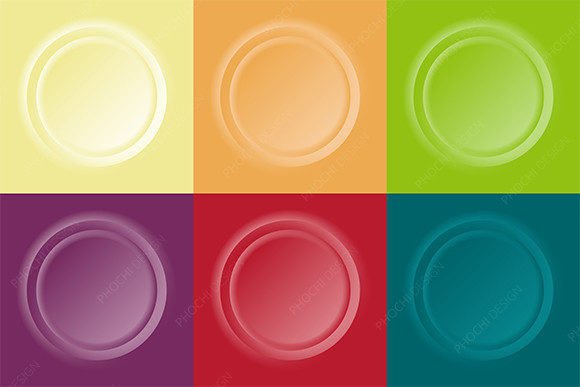
Furthermore, when selecting geometric elements, consider the psychological impact of different shapes. Circles often evoke feelings of unity and softness, while squares suggest stability and trust. Triangles can imply direction or conflict. Understanding these nuances ensures that your design choices align with your intended message. Always test your designs across different devices and print mediums to ensure that the scalability of SVG and vector files translates well in practice.
In conclusion, integrating geometric shape design elements into your creative workflow offers tangible benefits in terms of efficiency, consistency, and communication. By leveraging the technical advantages of Ai CC, EPS10, SVG, and JPEG Preview formats, professionals across various industries can enhance their output while reducing production time. Whether you are building a brand, teaching a class, or developing a website, these fundamental design tools provide the structure needed to convey your message clearly and professionally.