Evaluating Abstract Line Vector Illustrations for Modern Design
In the evolving landscape of digital design, abstract line art has emerged as a versatile and impactful visual element. Often characterized by minimalist aesthetics and geometric precision, these vector illustrations serve a multitude of purposes, from branding identities to web interface enhancements. For designers, marketers, and business owners, understanding the utility and implications of incorporating a set of abstract lines into a project is essential. This evaluation explores the practical applications, benefits, and considerations associated with this design trend, helping you determine if it aligns with your specific creative goals.
Understanding Abstract Line Vector Illustrations
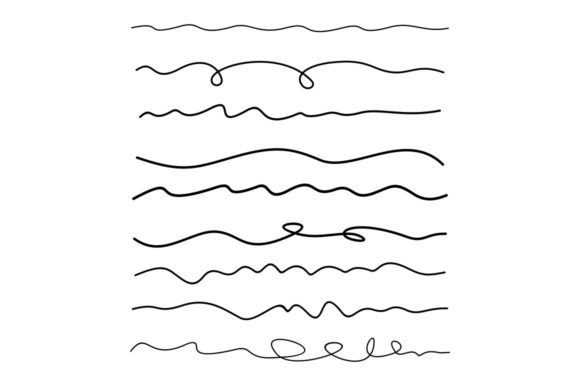
At its core, a set of abstract lines refers to a collection of graphical elements composed primarily of strokes, curves, and geometric shapes that do not represent realistic objects. When created as vector illustrations, these assets are defined by mathematical paths rather than pixels. This distinction is crucial because it allows the artwork to be scaled infinitely without any loss of quality. Whether enlarged for a billboard or reduced for a mobile icon, the lines remain crisp and clear.
The appeal of abstract lines lies in their simplicity and ambiguity. Unlike detailed illustrations that dictate a specific narrative, abstract lines invite interpretation. They can suggest movement, connectivity, structure, or fluidity depending on their arrangement. This openness makes them particularly effective in corporate and technological contexts where conveying complex ideas through simple visuals is often preferred.
Why Consider Abstract Lines for Your Project?
There are several compelling reasons why professionals might choose abstract line vectors over other visual styles. The primary driver is often versatility. Because these illustrations are devoid of specific cultural or contextual markers, they can be adapted to various industries, including finance, healthcare, technology, and education. They act as neutral visual anchors that support content without overpowering it.
Another significant factor is performance. In web design, load times are critical. Vector files, such as SVGs, are typically much smaller in file size compared to high-resolution raster images like JPEGs or PNGs. Using a set of abstract lines can enhance user experience by ensuring faster page loads, which is beneficial for both SEO rankings and user retention.
Furthermore, abstract lines offer extensive customizability. Since they are vector-based, designers can easily modify colors, stroke widths, and compositions to match brand guidelines precisely. This flexibility reduces the need for creating multiple variations from scratch, streamlining the design workflow.
Benefits and Strategic Advantages
Integrating abstract line illustrations into your visual strategy offers distinct advantages. One of the most notable benefits is visual clarity. In an era of information overload, minimalist designs help reduce cognitive load for viewers. Abstract lines guide the eye and create hierarchy without adding visual noise. This is particularly useful in user interface (UI) design, where clarity is paramount.
Additionally, these illustrations contribute to a modern and professional aesthetic. The clean lines and geometric precision associated with vector art convey a sense of order, innovation, and reliability. For brands aiming to project a forward-thinking image, abstract lines can reinforce this perception effectively.
From a practical standpoint, the scalability of vectors ensures consistency across platforms. Whether the asset is used on a social media post, a printed brochure, or a large-format display, the visual integrity remains intact. This consistency strengthens brand recognition and ensures a cohesive visual identity.
Tradeoffs and Considerations
While abstract line vectors offer numerous benefits, they are not without tradeoffs. One potential limitation is emotional resonance. Because abstract art is open to interpretation, it may lack the immediate emotional impact or storytelling capability of detailed, character-driven illustrations. If your goal is to evoke strong empathy or narrate a specific human experience, abstract lines might feel too detached or cold.
Another consideration is differentiation. The popularity of minimalist line art means that it is widely used. Without careful customization, there is a risk that your visuals may look generic or similar to competitors. To mitigate this, it is essential to invest time in unique compositions, custom color palettes, and distinctive stylistic tweaks that align with your brand’s personality.
Technical proficiency is also a factor. While vector files are flexible, editing them requires specific software skills, such as proficiency in Adobe Illustrator or similar tools. Teams lacking these resources may find it challenging to customize pre-made sets effectively, potentially limiting their utility.
Ideal Use Cases for Abstract Line Art
Abstract line illustrations are a strong fit in several specific scenarios. They excel in corporate branding, where the focus is on professionalism and clarity. Background elements, dividers, and icons created with abstract lines can enhance presentations, reports, and websites without distracting from the core message.
They are also highly effective in technology and SaaS products. Abstract lines can visually represent concepts such as data flow, connectivity, networks, and processes. For example, a series of interconnected lines can symbolize cloud computing or blockchain technology, making complex technical ideas more accessible to non-technical audiences.
In editorial and content marketing, abstract lines serve as excellent decorative elements. They can break up text, highlight key quotes, or frame images, adding visual interest to long-form content. Their subtle nature ensures they complement the text rather than compete with it.
When to Consider Alternatives
Despite their versatility, there are situations where alternative visual styles may be more appropriate. If your brand relies heavily on storytelling and character development, illustrated characters or detailed scenes may be more effective. For instance, educational materials for children or campaigns focused on personal testimonials often benefit from more expressive and relatable imagery.
Similarly, if your target audience responds better to warmth and organic textures, hand-drawn illustrations or photographic content might create a stronger connection. Abstract lines can sometimes perceive as sterile or impersonal, which may not align with brands emphasizing community, tradition, or artisanal quality.
Additionally, for projects requiring high-impact visual drama, such as entertainment or luxury fashion, bold typography, rich photography, or complex 3D renders might deliver the desired effect more powerfully than minimalist lines.
Practical Decision-Making Insights
To determine whether a set of abstract lines is right for your project, start by defining your primary objective. Are you aiming for clarity, modernity, and scalability? If so, abstract lines are likely a strong candidate. Are you seeking emotional engagement or specific narrative detail? In that case, consider more illustrative or photographic options.
Evaluate your technical resources. Ensure your team has the capability to edit and customize vector files to avoid generic outcomes. Invest in unique modifications to ensure your visuals stand out.
Finally, consider your audience’s expectations. Test different visual styles with a segment of your target market. Feedback can provide valuable insights into whether abstract lines resonate with your users or if they prefer a different aesthetic approach.
In conclusion, abstract line vector illustrations are a powerful tool in the modern designer’s toolkit. They offer scalability, versatility, and a clean aesthetic that suits many professional contexts. By carefully weighing their benefits against potential limitations and aligning them with your strategic goals, you can leverage these assets to enhance your visual communication effectively.